

Tonal Harmony Workbook Answers PDF: A Comprehensive Guide (Updated 04/09/2026)
Today, April 9th, 2026, at 03:04:36, students actively seek comprehensive PDF solutions for the Tonal Harmony Workbook, often encountering security measures like Ray ID 9e95414b4edfe63d and Captcha challenges.
Resources like Quizlet and Issuu offer potential access to complete and elaborated solutions manuals, including the 9th edition by Stefan Kostka, aiding harmonic analysis and understanding.
Understanding the Tonal Harmony Workbook
The Tonal Harmony Workbook, frequently utilized with Kostka’s textbook, is a cornerstone resource for music theory students; It’s designed to reinforce concepts through practical exercises, demanding a solid grasp of harmonic principles; Students often require tonal harmony workbook answers PDF to verify their work and identify areas needing improvement.
The workbook progresses systematically, starting with fundamental elements like pitch and rhythm, then advancing to complex topics such as diatonic and non-diatonic harmony. Exercises include Roman numeral analysis, chord identification, and melodic dictation – all crucial for developing aural and analytical skills.
However, accessing solutions can be problematic. Websites offering these resources often employ security measures, triggering Captcha challenges and utilizing systems like Ray ID (e.g., 9e95414b4edfe63d) to differentiate between human users and automated bots. Students must navigate these hurdles to obtain the necessary support for their studies.
The Importance of Solutions Manuals
Solutions manuals for the Tonal Harmony Workbook are invaluable tools for effective learning. They provide students with verified answers, enabling self-assessment and pinpointing areas of weakness in harmonic understanding. Accessing a tonal harmony workbook answers PDF allows for independent study and reinforces concepts beyond classroom instruction.
These manuals aren’t simply about obtaining correct answers; they offer insight into the process of arriving at those solutions. Examining detailed explanations clarifies analytical techniques, like Roman numeral analysis and chord identification, fostering a deeper comprehension of musical structure.
However, finding legitimate resources can be challenging. Platforms like Issuu host complete, elaborated manuals, but often require navigating security protocols, including Captcha verification and Ray ID checks. Ethical considerations are also paramount when utilizing these resources, emphasizing their role as learning aids, not replacements for genuine effort.
Common Issues Students Face with Tonal Harmony
Students frequently struggle with tonal harmony due to its abstract nature and the complexity of musical analysis. A primary difficulty lies in accurately performing Roman numeral analysis, often misinterpreting harmonic function and chord progressions. Identifying chord qualities – major, minor, diminished, augmented – also presents a significant hurdle, impacting their ability to decipher harmonic structures.
Furthermore, recognizing non-chord tones and their melodic embellishments requires a keen ear and a solid understanding of voice leading principles. Accessing a tonal harmony workbook answers PDF can help overcome these challenges, but security measures like Captcha and Ray ID (9e95414b4edfe63d) can impede access to solutions.
Many students also find melodic dictation particularly difficult, struggling to transcribe both melodies and underlying harmonies. Utilizing resources like Quizlet alongside a solutions manual can provide targeted practice and clarification.
Specific Chapters & Exercises – Where to Find Help
PDF solutions often target specific chapters, aiding with exercises in pitch, rhythm, diatonic harmony, and non-chord tones, overcoming access barriers like Ray ID.
Chapter 1 of the Tonal Harmony Workbook establishes foundational concepts, making accurate answers crucial for subsequent learning; however, accessing these resources can be problematic.
Students frequently encounter Captcha challenges and security systems, identified by a Ray ID like 9e95414b4edfe63d, when seeking solutions online, particularly on platforms like Quizlet.
Issuu hosts potential solutions manuals, offering complete and elaborated answers, but users must navigate these platforms carefully. Initial exercises focus on identifying pitches, understanding rhythmic values, and constructing basic notation.
PDF solutions for this chapter typically provide detailed analyses of melodic and rhythmic dictation exercises, alongside correct answers for interval and scale identification, aiding comprehension of fundamental musical elements.
Chapter 2: Diatonic Harmony – Identifying Chord Progressions
Chapter 2 delves into the core of tonal harmony: diatonic chord progressions. Finding reliable tonal harmony workbook answers PDF resources for this chapter is often hindered by website security, triggering systems like those requiring a Ray ID – specifically, 9e95414b4edfe63d – and Captcha verification.
Issuu may contain complete solutions manuals, while Quizlet offers explanations, but access isn’t always straightforward. Exercises center on Roman numeral analysis, identifying chord qualities (major, minor, diminished, augmented), and recognizing common harmonic functions.
PDF solutions should demonstrate correct harmonic analysis, clearly indicating chord inversions and non-chord tones. Students benefit from elaborated answers explaining why a specific progression functions as it does, not just what it is.
Chapter 3: Non-Chord Tones – Recognizing Melodic Embellishments
Successfully navigating Chapter 3, focused on non-chord tones, often requires accessing tonal harmony workbook answers PDF, a process frequently complicated by online security measures. Websites employ systems like Ray ID 9e95414b4edfe63d and Captcha challenges to verify users, creating access barriers.
Resources like Issuu and Quizlet can provide assistance, though completeness varies. Exercises involve identifying embellishments – passing tones, neighboring tones, suspensions, retardations, appoggiaturas, and escape tones – within melodic lines.
Effective PDF solutions should not only label the non-chord tones but also explain their function within the harmonic context. Elaborated answers demonstrate how these embellishments create melodic interest and contribute to the overall tonal flow, aiding comprehension.

Utilizing Online Resources for Assistance
Quizlet explanations and Issuu documents offer potential tonal harmony workbook answers PDF, though access may require overcoming Ray ID and Captcha hurdles.
Quizlet Explanations & Textbook Solutions
Quizlet emerges as a valuable platform for students grappling with the complexities of tonal harmony workbook answers PDF, offering a diverse range of user-generated explanations and textbook solutions specifically tailored to the 8th edition (ISBN 9781259686764).
However, accessing these resources isn’t always straightforward. The website employs robust security measures, frequently triggering a Captcha challenge to verify human access and prevent automated scraping of content. This security system, identified by a unique Ray ID (like 9e95414b4edfe63d), aims to protect the integrity of the platform and its resources.
Students should be prepared to complete these challenges to gain access to potentially helpful explanations, flashcards, and practice questions related to harmonic analysis, chord progressions, and other core concepts covered in the workbook. While not a direct source for complete solutions manuals, Quizlet provides supplementary learning materials that can significantly aid comprehension.
Issuu Documents: Accessing Solutions Manuals
Issuu presents itself as a potential repository for complete, elaborated solutions manuals for Tonal Harmony, specifically the 9th Edition authored by Stefan Kostka. Documents hosted on Issuu claim to offer comprehensive answers to exercises found within the workbook, potentially assisting students seeking detailed guidance.
However, users should exercise caution when utilizing resources from platforms like Issuu. The legality and ethical implications of accessing and using complete solutions manuals without proper authorization must be considered. While the availability of these documents can be tempting, relying solely on pre-made solutions may hinder genuine learning and skill development.
Furthermore, the quality and accuracy of solutions found on Issuu can vary significantly. It’s crucial to critically evaluate the content and cross-reference it with textbook materials and instructor guidance to ensure reliability and understanding.
The Role of Ray ID & Captcha Challenges (Access Barriers)
When searching for Tonal Harmony Workbook answers PDF online, students frequently encounter robust security measures designed to restrict access to solutions. Websites, like Quizlet, often employ Captcha challenges to verify users are human and not automated bots attempting to bypass access controls.
These systems generate a unique Ray ID – in one instance, 9e95414b4edfe63d – to track requests and identify potentially malicious activity. Successfully completing the Captcha is often a prerequisite for gaining access to explanations or textbook solutions.
These barriers are implemented to protect copyrighted materials and prevent unauthorized distribution of answer keys. While frustrating for students seeking assistance, they highlight the importance of ethical resource acquisition and the challenges in freely accessing online educational materials.

Types of Exercises & Corresponding Solutions
Tonal Harmony Workbook answers PDF commonly address Roman Numeral Analysis, Chord Identification, and Melodic Dictation exercises, providing harmonic and melodic comprehension support.
Roman Numeral Analysis – Decoding Harmonic Function
Roman Numeral Analysis forms a cornerstone of understanding tonal harmony, and Tonal Harmony Workbook answers PDF frequently provide detailed breakdowns of these analyses.
Students often struggle with correctly identifying chord functions – Tonic, Dominant, Subdominant, and their inversions – within a progression.
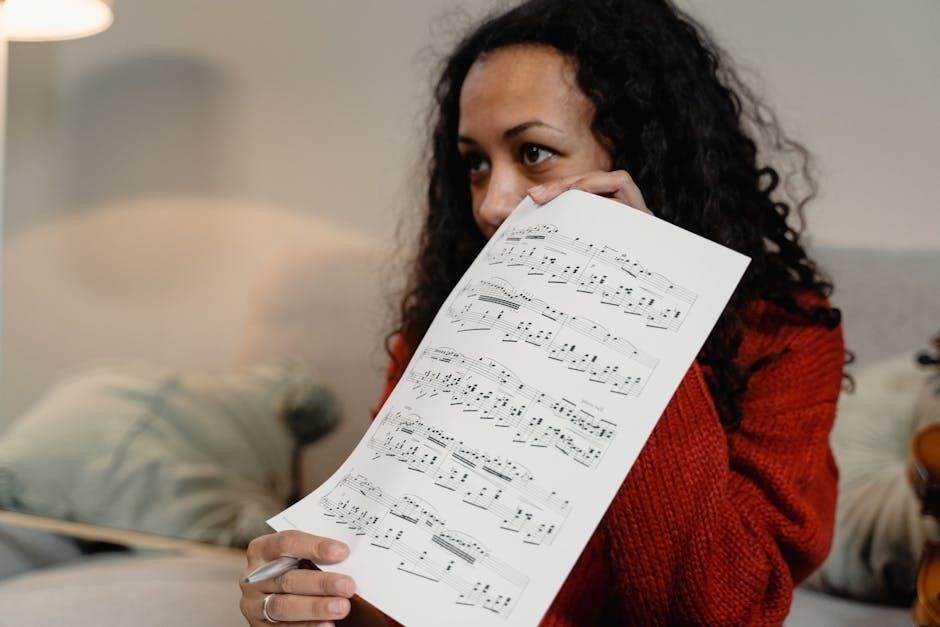
Solutions manuals demonstrate how to accurately label chords using Roman numerals (I, IV, V, vi, etc.), indicating major, minor, diminished, or augmented qualities.
These resources clarify the role of each chord in establishing tonal stability or creating harmonic tension, crucial for comprehending musical structure.
PDF solutions often include explanations of non-chord tones and their impact on harmonic function, enhancing analytical skills.
Accessing these resources, despite potential Captcha challenges and Ray ID verification, significantly aids in mastering this fundamental skill.
Chord Identification – Recognizing Chord Qualities
Tonal Harmony Workbook answers PDF are invaluable for mastering chord identification, a skill demanding precise recognition of chord qualities – major, minor, diminished, and augmented.
Students frequently encounter difficulties distinguishing between similar chord types, particularly when inversions are involved.
Comprehensive solutions manuals provide step-by-step guidance on determining chord qualities by analyzing the intervals within each chord and its relationship to the key.
These resources often include detailed explanations of chord symbols and their corresponding voicings, clarifying harmonic structures.
Accessing these PDFs, even with potential hurdles like Captcha challenges and Ray ID verification on platforms like Quizlet, is crucial for building a strong harmonic foundation.
Issuu documents may offer elaborated solutions, further aiding in the accurate identification of chord qualities within complex musical passages.
Melodic Dictation – Transcribing Melodies & Harmonies
Tonal Harmony Workbook answers PDF significantly assist students with melodic dictation, a challenging exercise requiring accurate transcription of both melodies and underlying harmonies.
Many students struggle with accurately notating rhythms and identifying intervals, especially when harmonic context is complex.
Solutions manuals provide correct transcriptions, allowing students to compare their work and pinpoint areas for improvement.
These resources often break down the dictation into smaller segments, highlighting key melodic and harmonic features.
Overcoming access barriers, such as Captcha challenges and Ray ID requirements on sites like Quizlet, is worthwhile for obtaining these crucial aids.
Issuu may host complete solutions, offering detailed analyses of melodic contours and harmonic progressions, enhancing dictation skills.

Navigating PDF Solutions – What to Look For
PDF solutions vary; seek complete versus elaborated answers, understanding notation conventions, and always considering the legality of accessing these Tonal Harmony resources.
Complete vs. Elaborated Solutions

When searching for tonal harmony workbook answers PDF, understanding the difference between “complete” and “elaborated” solutions is crucial. Complete solutions simply provide the final answer – the correct Roman numeral analysis, chord identification, or melodic transcription. They are concise but offer limited pedagogical value.
Elaborated solutions, as found on platforms like Issuu for Stefan Kostka’s 9th edition, go further. They detail the reasoning behind the answer, showing step-by-step harmonic progressions, explaining non-chord tone functions, and justifying melodic choices. This approach is invaluable for learning, as it demonstrates the thought process required for successful harmonic analysis.
Students should prioritize elaborated solutions whenever possible, even if encountering Captcha challenges or Ray ID verification, as they foster a deeper understanding of tonal principles beyond simply obtaining the correct answer. These detailed explanations transform a solutions manual from a cheat sheet into a powerful learning tool.
Understanding Solution Notation & Conventions
Successfully utilizing a tonal harmony workbook answers PDF requires familiarity with standard musical notation and analytical conventions. Roman numeral analysis, a cornerstone of tonal harmony, employs specific symbols to denote chord quality (major, minor, diminished, augmented) and inversions. Understanding these is paramount.
Solutions will often utilize figured bass to indicate specific voicings and melodic embellishments. Recognizing non-chord tones – passing tones, neighbor tones, suspensions – and their proper labeling is essential. Furthermore, be aware of common abbreviations used for chord functions (e.g., V7, IV6).
Consistency in notation is key. While different sources may exist, including those accessed via Quizlet or Issuu, a solid grasp of fundamental conventions will allow you to decipher any solution, even when facing Captcha hurdles or Ray ID checks, and truly learn the material.
Legality and Ethical Considerations of Using Solutions
Accessing tonal harmony workbook answers PDF resources, particularly through platforms like Issuu, raises important ethical and legal questions. While seeking help is common, directly copying solutions hinders genuine learning and may violate academic integrity policies.
Many solutions manuals are copyrighted material. Unauthorized distribution or use constitutes infringement. Even circumventing Captcha challenges or Ray ID security measures to access protected content can be problematic.
Instead of relying solely on answers, use them as a check on your own work. Focus on understanding the process of harmonic analysis, not just the final result. Utilizing resources like Quizlet for explanations can be beneficial, but always prioritize independent problem-solving to develop a strong foundation in tonal harmony.

Troubleshooting Access to PDF Files
PDF access for tonal harmony workbook answers often involves overcoming Captcha challenges and Ray ID security, alongside ensuring reader compatibility for viewing.
Dealing with Captcha Challenges & Security Systems
Accessing Tonal Harmony Workbook answer PDFs frequently triggers website security systems designed to differentiate between human users and automated bots. These systems often present Captcha challenges – visual or audio tests requiring specific responses to grant access. The Ray ID (9e95414b4edfe63d), as seen on platforms like Quizlet, is a unique identifier used to monitor and potentially block suspicious activity.
Successfully navigating these hurdles requires patience and careful attention to the instructions provided within the Captcha. Repeated failed attempts may lead to temporary access restrictions. Utilizing a stable internet connection and ensuring browser compatibility can also minimize issues. Remember that circumventing these security measures is generally discouraged and may violate website terms of service, potentially leading to blocked access.
Alternative Sources for Solutions (Caution Advised)
While official solutions manuals and reputable educational platforms are preferred, students sometimes explore alternative sources for Tonal Harmony Workbook answers. These may include online forums, file-sharing websites, or unofficial document repositories like Issuu. However, exercising extreme caution is crucial when utilizing such resources;
The accuracy and completeness of solutions found on these platforms are often questionable, potentially leading to incorrect learning and hindering genuine understanding of harmonic principles. Furthermore, downloading materials from untrusted sources carries significant risks, including malware infections and copyright infringement. Always prioritize ethical considerations and legal compliance. Relying heavily on unverified solutions can impede the development of critical analytical skills essential for success in music theory.

PDF Reader Compatibility & Troubleshooting
Accessing Tonal Harmony Workbook answer PDFs can sometimes be hindered by compatibility issues with your PDF reader. Adobe Acrobat Reader is generally recommended for optimal viewing and functionality, but alternative readers like Preview (on macOS) or Foxit Reader can also be used. If a PDF fails to display correctly, ensure your reader is updated to the latest version.
Common troubleshooting steps include clearing the reader’s cache, disabling plugins, and attempting to open the file with a different PDF viewer. Corrupted PDF files may require re-downloading from the original source. Security settings within the reader might also block certain features; adjusting these settings cautiously could resolve display problems. Remember to scan downloaded files with antivirus software before opening them to protect against potential threats.